Electric boats generate far more useful data than a helm display ever sees. The fast propulsion traffic stays on the drive bus, and anything that reaches the cloud usually has to pass close to the torque path to get there.
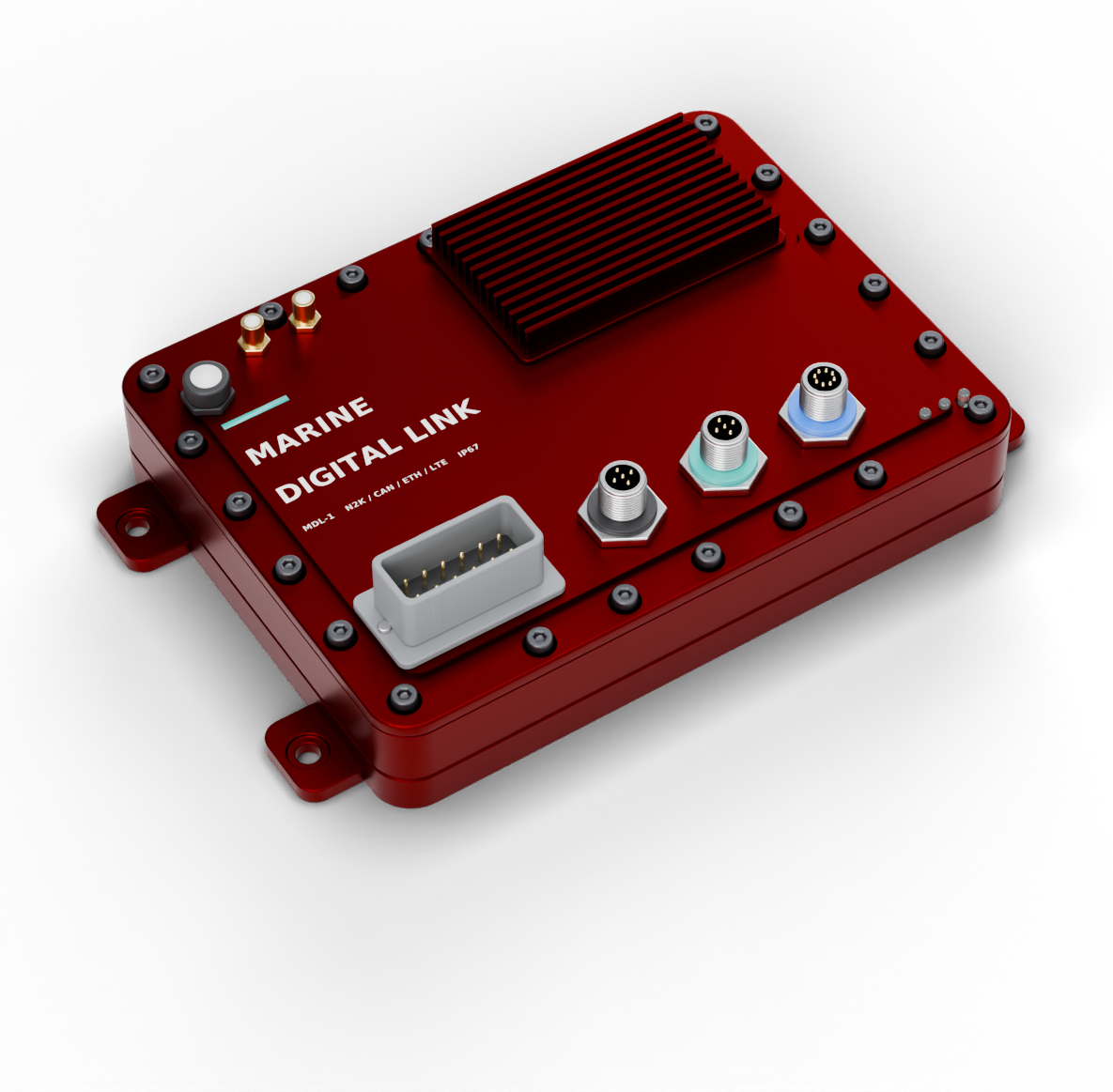
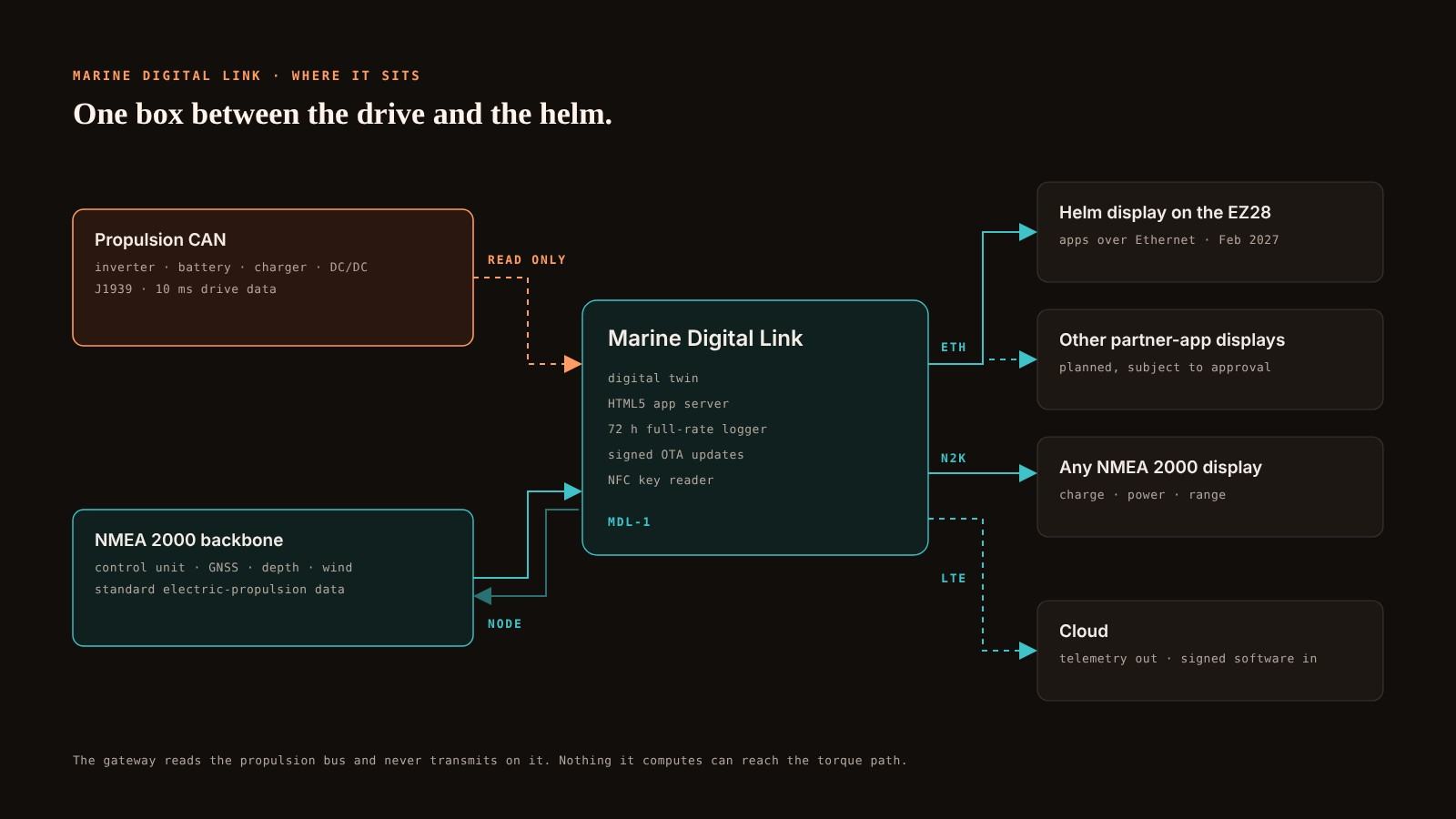
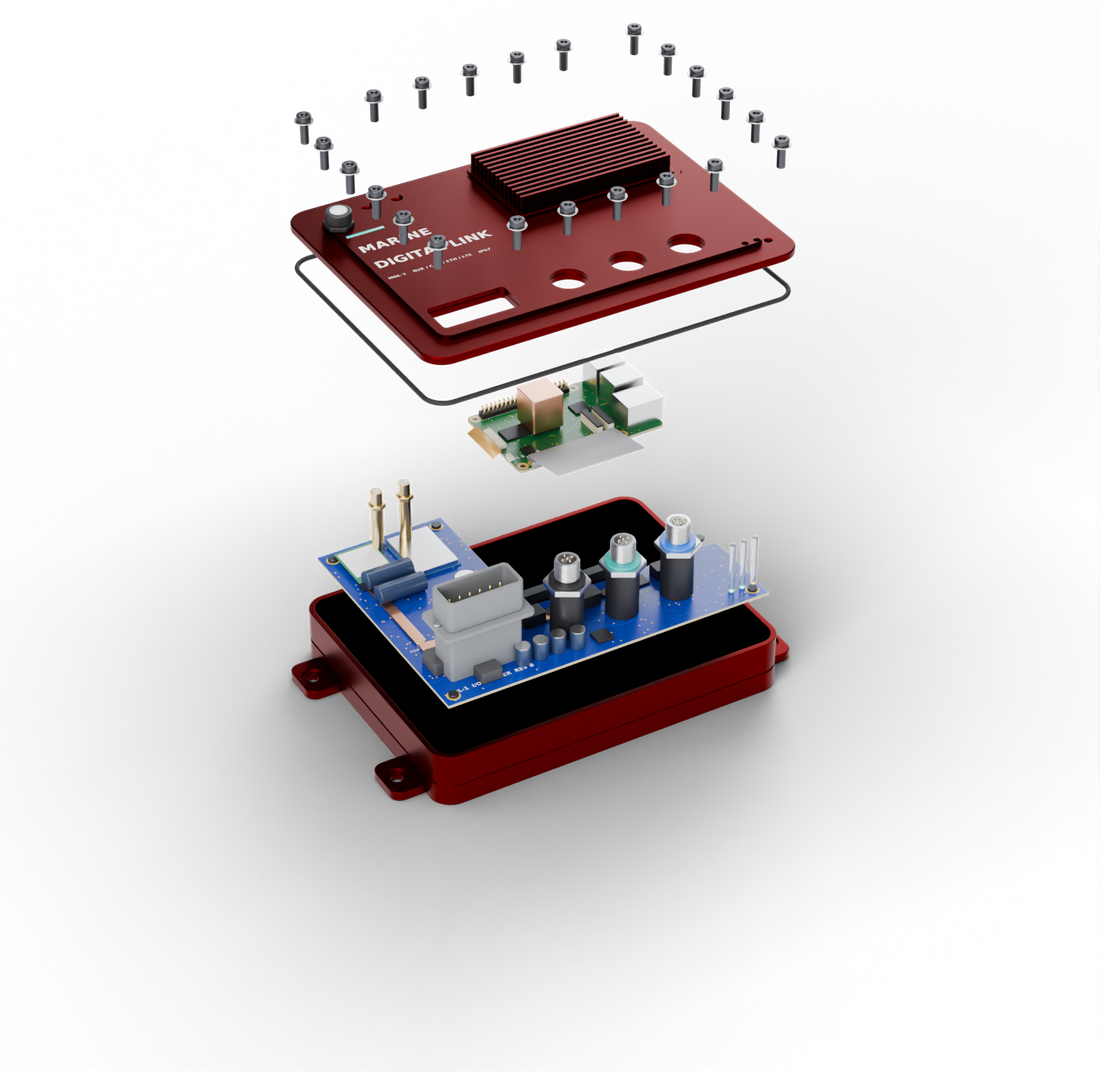
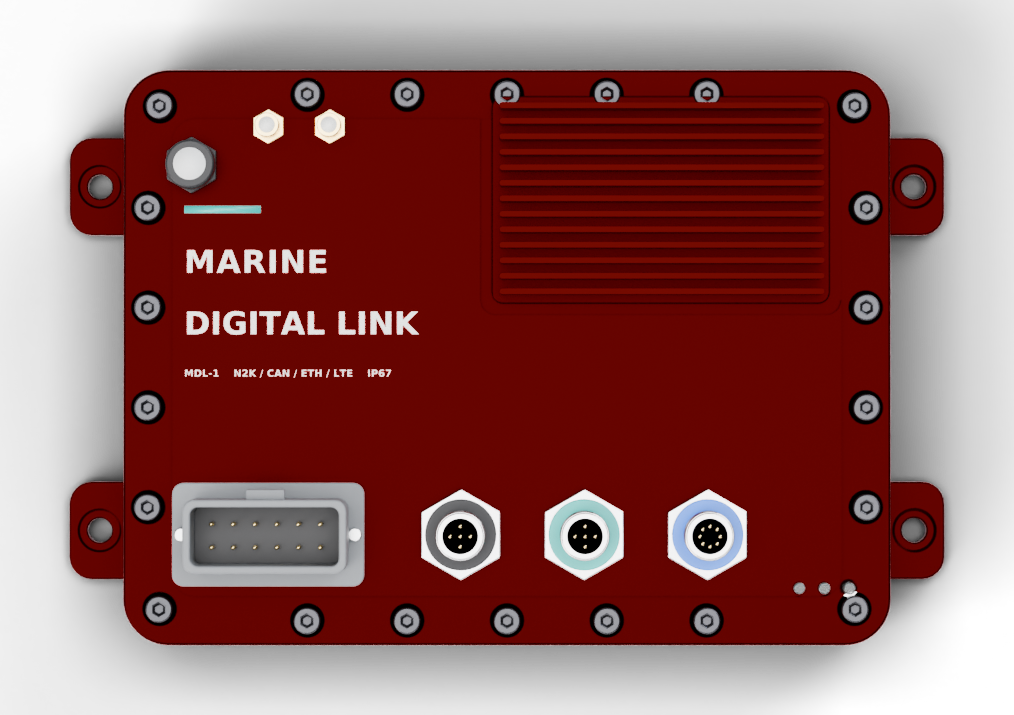
The Marine Digital Link separates the two. It sits on both networks, never transmits on the propulsion bus, and does four jobs in the order the data takes: listen, model, serve, and update. It is also the boat's key reader: tap a phone or a key card and the boat wakes up. It is the second computer of the Crooze EZ28 software-defined boat.
01 · Listen
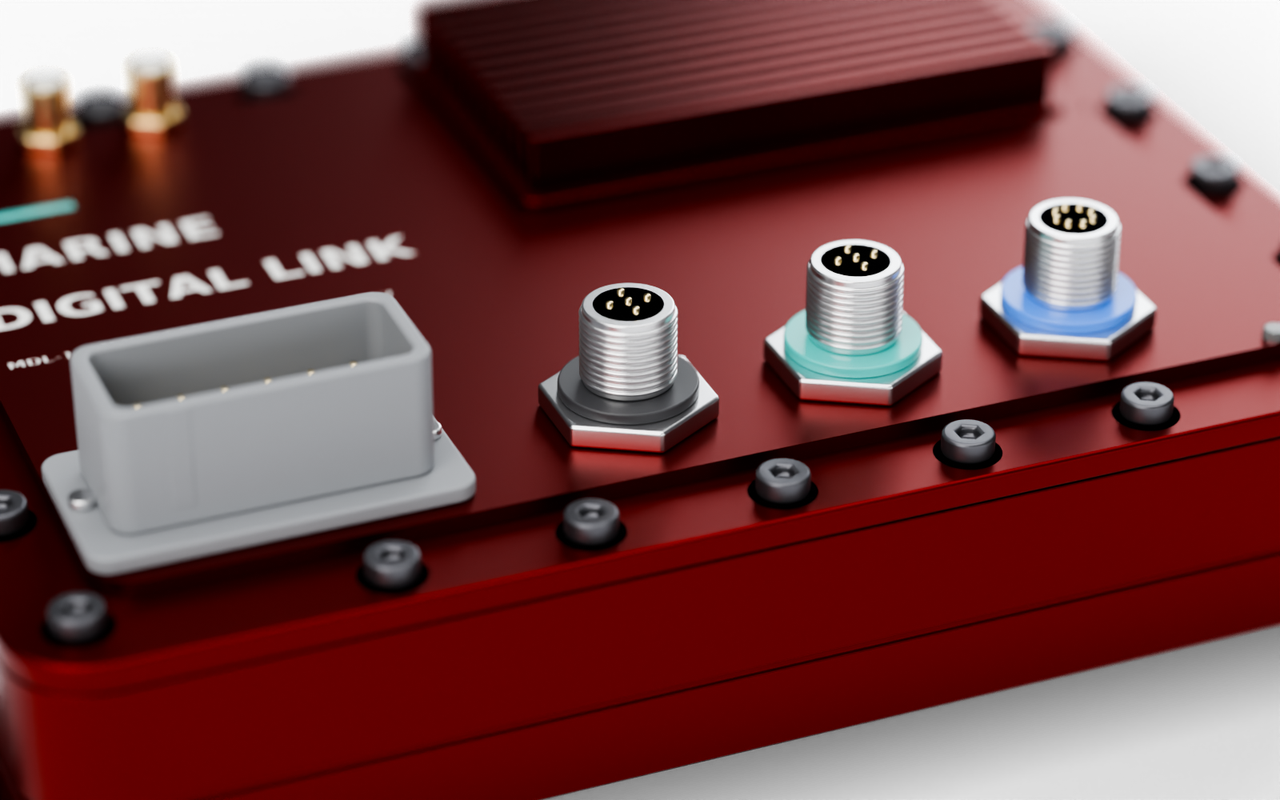
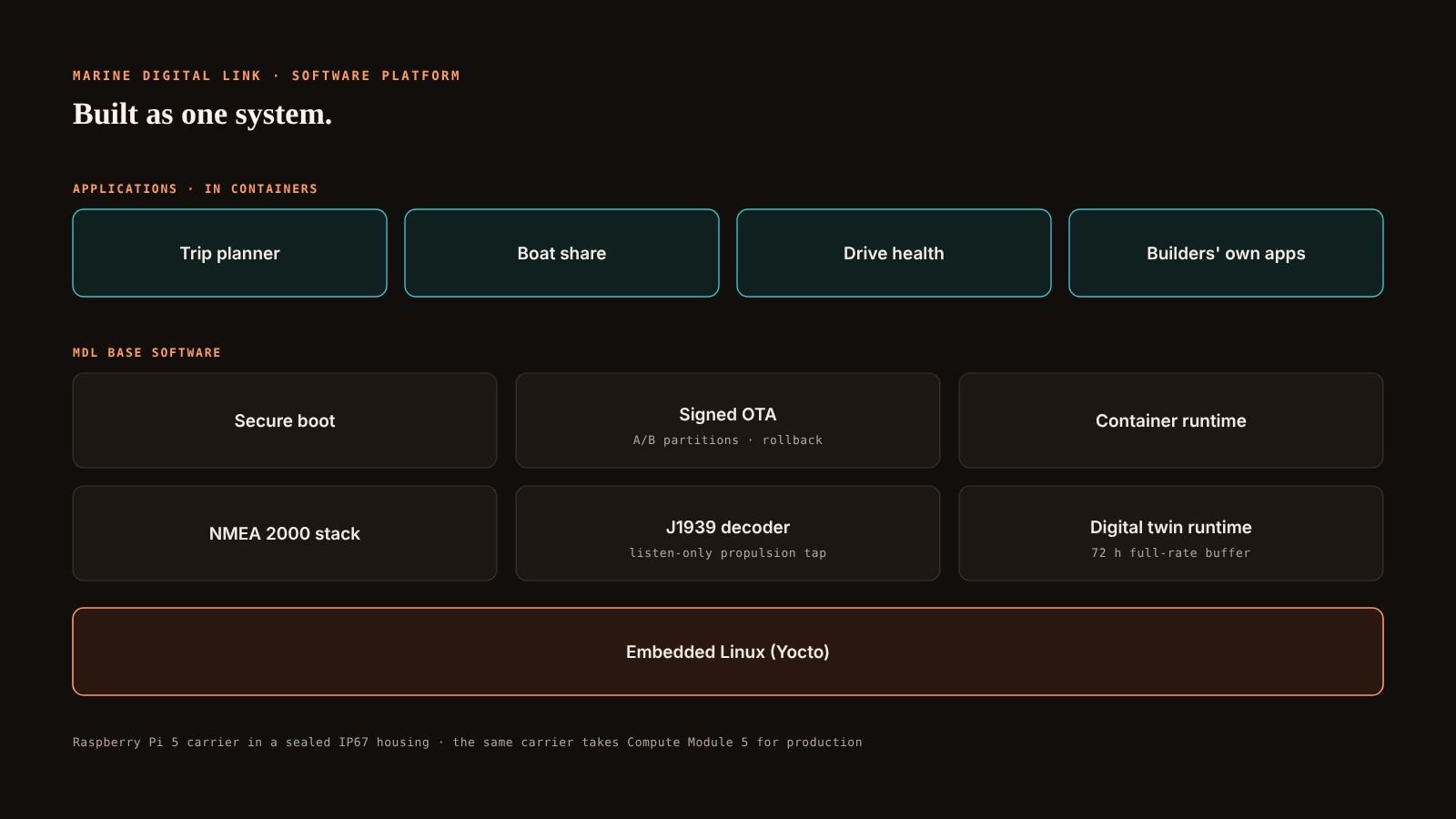
An isolated CAN FD interface on the propulsion bus, held in hardware listen-only mode: no frames sent, no acknowledgements. That is where the 10-millisecond drive data lives. A second interface makes it a full NMEA 2000 node, and both buses share one time base.
02 · Model
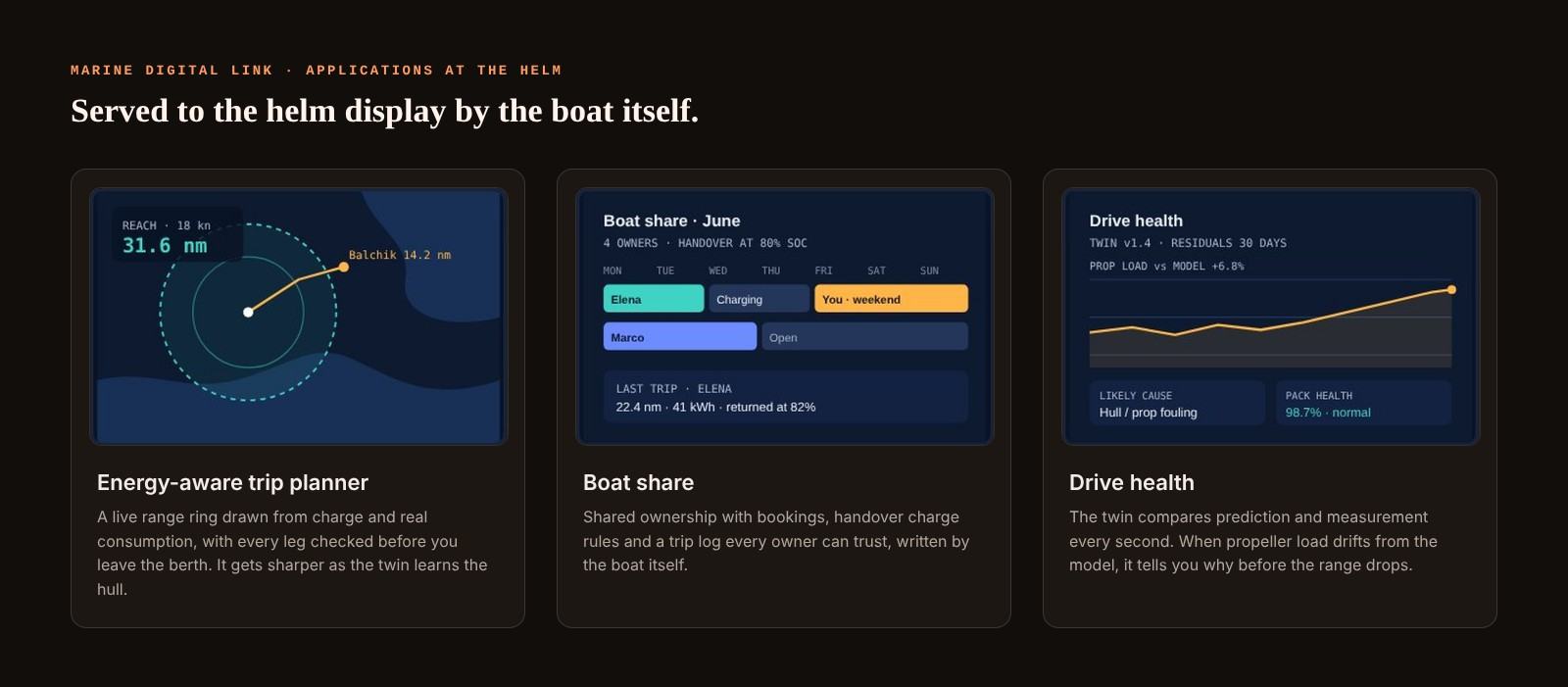
Battery, inverter, motor, propeller, and hull models run alongside the drive as a shadow twin, fed from a 72-hour full-rate buffer. They estimate what nobody measures, such as real reach and pack ageing, and flag what has changed. Advisory only, never in the control loop.
03 · Serve
A local web server delivers the boat's applications to the helm display over Gigabit Ethernet. Drive and battery data also travel as standard NMEA 2000 electric-propulsion messages, so any compatible display on the backbone can show them.
04 · Update
Data is stored on board and uploaded whenever LTE or marina Wi-Fi appears. Software updates arrive as signed images, staged on an A/B partition and rolled back if they fail. The cloud returns only signed software, and there is no remote path to the drive.